Owners often buy the wrong fix first
A familiar story: water shows up in the firebox after a storm, someone suggests a cap, the cap goes on, and the next storm brings the same puddle. The cap was not a bad idea. It just was not the answer to that leak, because the water was coming through the crown beside it.
The top of a masonry chimney has two parts that keep rain out, and they fail in different ways. Telling them apart before you pay for either one is the point of this post.
What each part does
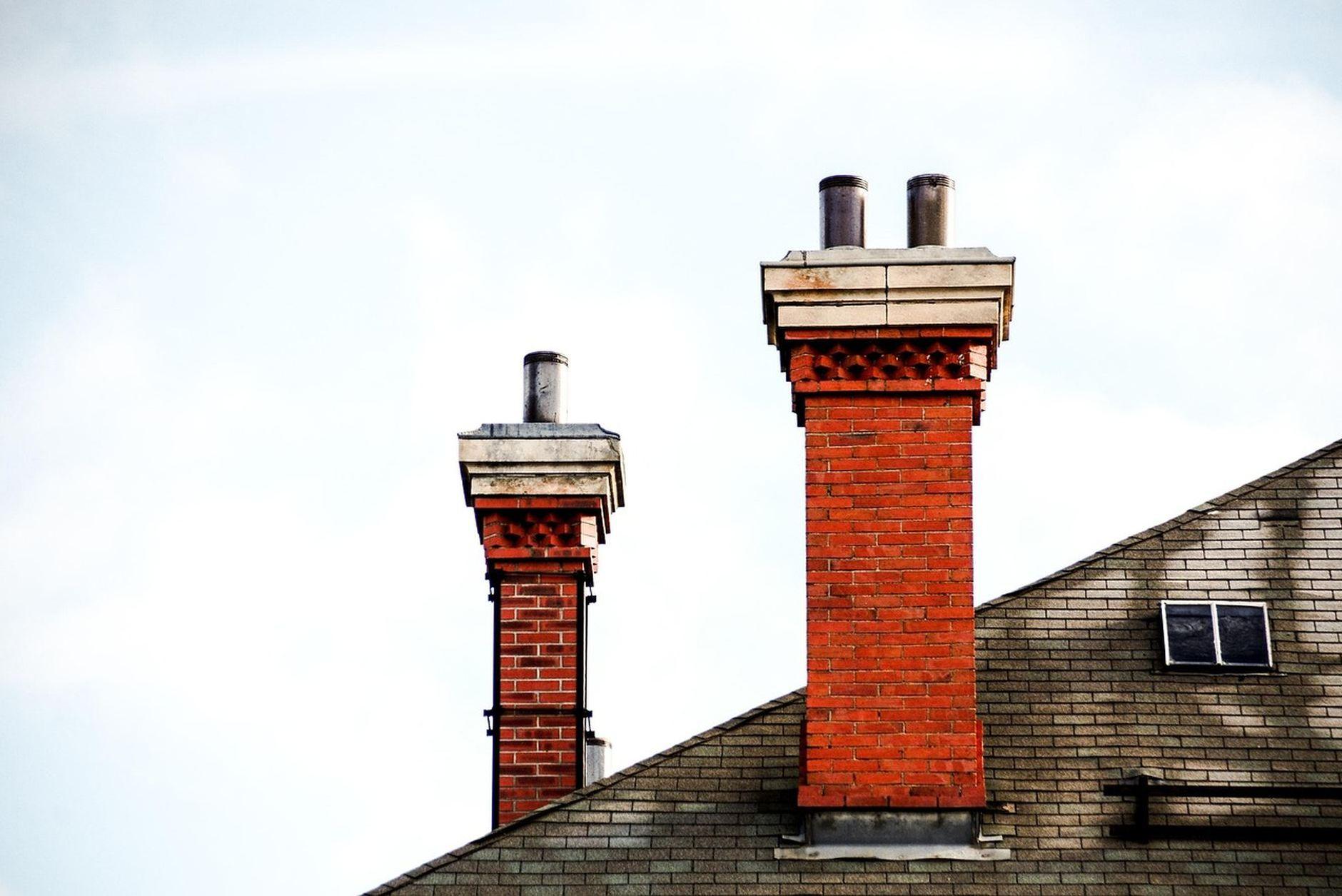
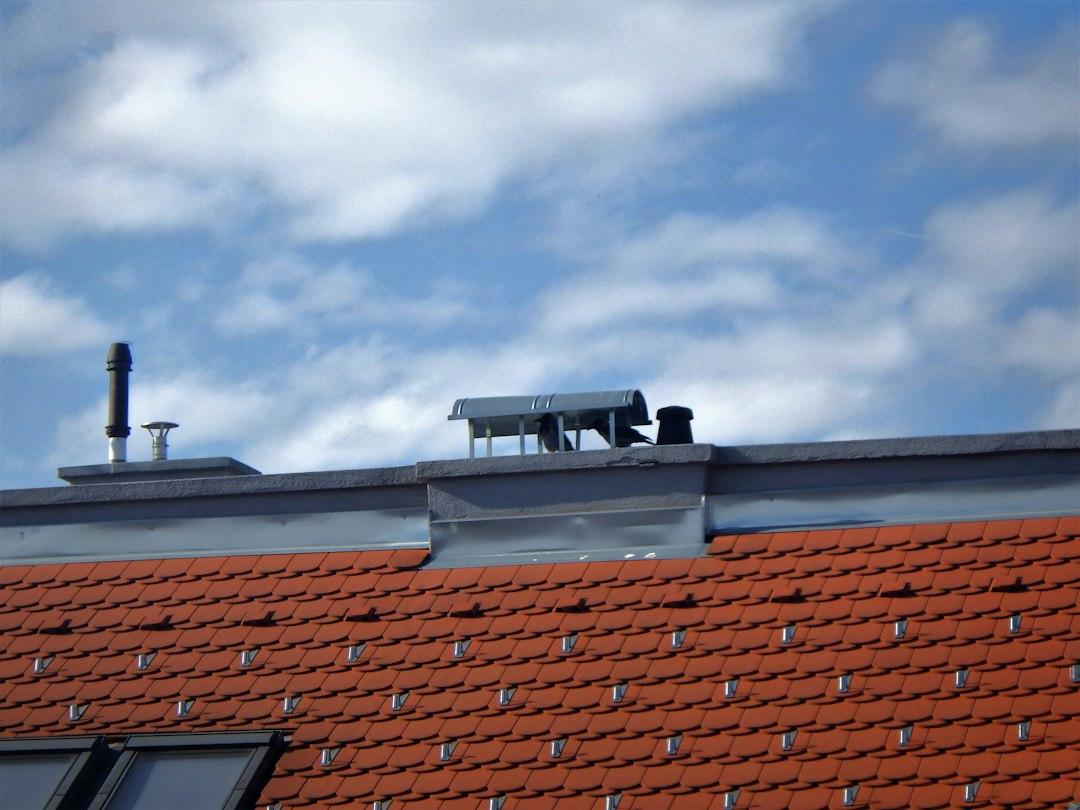
The cap is a metal hood that sits over the flue opening, with mesh sides. It stops rain falling straight down the flue, keeps birds and raccoons from nesting inside, and holds back embers. On a single flue it clamps to the clay tile. On a chimney with several flues, a larger cap can cover them all and fasten to the brick.
The crown is the sloped slab of concrete or mortar that closes the top of the brickwork, between the outer brick and the flue tile. It protects the brick walls from water soaking down into them from above. A well-built one overhangs the brick and slopes away from the tile. Plenty of Orange County chimneys got something less: a flat layer of leftover mortar troweled on when the house went up.
A cap protects the hole. A crown protects the masonry around the hole. A chimney needs both.
How to tell which one is leaking
The clues usually point one way or the other.
Signs that point at the cap or its absence
- Water collects on the smoke shelf or in the firebox, right after rain, and dries fast
- Twigs, leaves or nesting material fall into the fireplace
- Rust streaks on the damper plate
- A rattling or whistling noise up the flue on windy days
Signs that point at the crown
- Damp or stained drywall on the chimney breast, not just in the firebox
- White powder (efflorescence) on the brick outside, near the top
- Brick faces flaking off in the upper courses
- Cracks across the top slab that you can see from the yard or a neighbor's upstairs window
When both sets of signs show up together, both parts usually need work. A cap on top of a cracked crown still lets water into the brickwork. A fresh crown around an open flue does nothing for the rain that drops straight in.
What sets each price
At Overton Chimney Group a fitted cap is quoted after we measure. The simplest job is a stainless hood on one standard round or square tile. The biggest is a custom cover that spans several flues on a large chimney, or a copper unit made to match the house.
Crown repair has no posted figure. The work runs from sealing a handful of hairline cracks to breaking off the old slab and forming a new one, and the price follows the size of the top, the number of tiles it surrounds, and how much of the old slab has let go. We write that price down once we have been on the roof and seen it.
| Top of the chimney | Overton price |
|---|---|
| Leak traced and closed, any source | $595 to $3,550 |
| Full camera run of the flue, Level 2 | $415 |
| Crown sealing or recasting | written after we see it |
| Hood with mesh over the flue, fitted | quoted after we measure |
If water has been entering through the top for a long time, we suggest a camera look down the flue at the same visit. Years of rain can crack clay tiles and loosen joints far below the part anyone sees from the roof.
Deciding where to start
What decides the right fix is the evidence on your own roof, not the season or a coupon. Describe where the water appears and what the top of the chimney looks like from the ground, and we will plan a visit that checks both parts before recommending either.
When to do both at once
On many older Santa Ana chimneys the honest answer is both. If the crown is cracked and the flue is open, sealing only one leaves the other as the next leak. Doing them together also saves a second trip onto the roof and a second round of moving tile. We list them as separate lines on the quote so you can see what each costs and decide. If budget means one has to wait, we tell you which of the two is letting in more water so the money goes there first.
There are cases where one is enough:
- A crown in good shape and an open flue: the cap alone solves it.
- A cap that is already sound and a crown with fine surface cracks: sealing the crown may be all it needs.
- A crown that is coming apart in chunks: no cap will help until the top is rebuilt.
Boxed-in metal chimneys are different
If your chimney is a wood-framed box clad in stucco or siding with a metal pipe inside, it has no masonry crown. The top is a metal lid instead, and it fails by rusting. Our post on rusted chase cover replacement covers that case.
Getting the top of your chimney sorted
The cap installation page and the crown repair page describe each job in full. If you are in Santa Ana, Garden Grove, Tustin or Placentia and you are not sure which part is failing, head to our contact page and tell us what you have noticed. We will look at both parts and tell you plainly which one is letting the rain in.
Is there a mark by your chimney right now?
Overton starts at that mark, checks the attic, then tests the roofline part by part until the entry point is clear. We work from Santa Ana across Tustin, Garden Grove, Placentia and the rest of Orange County.